
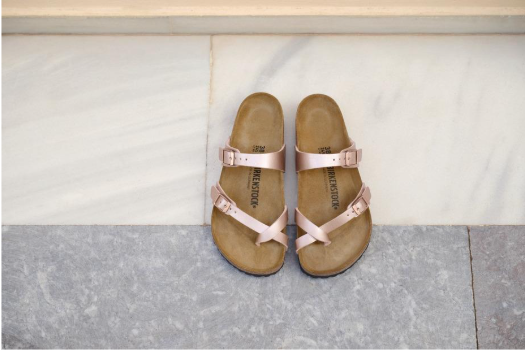

There is a particular kind of suffering that wedding guests know well. It begins somewhere between the vows and the starter course, a quiet throb in the arch, a blister forming at the heel strap. By dessert, you are holding your shoes in one hand and your dignity in the other.
It does not have to be this way.
The world of comfortable sandals for women has quietly revolutionised itself. Today’s celebration-ready styles are built on footbed technology, adjustable straps, and materials that actually breathe. Here is your no-nonsense guide to finding the sandal that lets you dance, mingle, and eat a second slice of cake in complete comfort.
1. Know Your Foot Before You Know Your Style
Before anything else, understand what your foot actually needs.
- Wide feet do better with open-toe silhouettes and adjustable buckle straps
- High arches need contoured footbeds, not flat foam
- Sensitive heels benefit from cushioned back straps or backless mules
- Swollen feet (hello, summer weddings) need styles with room to expand
This is not vanity shopping. This is engineering.
2. The Silhouettes Worth Knowing
Thong sandals are the classic. Minimal strapping, maximum airflow.
Women’s t-strap sandals are the unsung heroes of wedding footwear. Pair them with a flowy midi dress, beneath a saree or wide-leg trousers, and the look is effortlessly polished.
Strappy block heels offer height without the ankle-rolling anxiety of stilettos. Look for ones with padded toe boxes.
Embellished flat sandals have had a serious moment in bridal and guest fashion alike. Beading, metallic leather, and jewel tones make a flat sandal feel intentional rather than an afterthought.
3. The Materials Conversation Nobody Has Enough
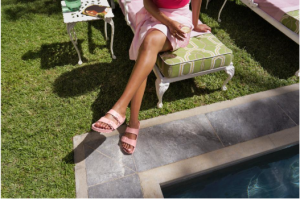
Natural leather and suede mould to the foot over time. Cork footbeds offer genuine arch support. EVA soles absorb impact on hard dance floors.
Some of the most comfortable sandals for women now come from heritage footwear brands that have been refining their footbed technology for decades.
The Birkenstock Arizona, for instance, with its contoured cork-latex sole and anatomically shaped footbed, has found its way onto wedding guest feet in a way that would have seemed unlikely ten years ago. The Birkenstock Gizeh (a thong style with a toe post) and the Birkenstock Mayari (a criss-cross toe strap design) offer slightly more formal silhouettes that work well under palazzo trousers or flared skirts.
4. Wedding Sandals for the Whole Day
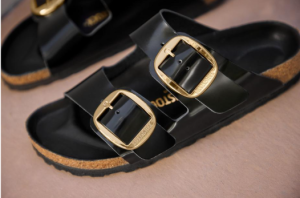
The real test of wedding sandals is not how they look in the photo. It is how they perform at hour seven, on a marquee dance floor, after three glasses of something sparkling.
Look for these practical markers when shopping:
- Adjustable buckles so you can loosen as the evening progresses
- Non-slip soles for outdoor terrain (grass, cobblestone, decking)
- Backless or slingback options if you tend to overheat
Some guests are now pairing occasion outfits with the Birkenstock Boston clog (in leather or suede) for autumn and winter celebrations, or the Madrid single-strap slide — a women’s silhouette often seen in metallic finishes for evening dressing. The silhouettes are simple, the comfort credentials are serious, and when styled with intention, they work.
5. Break Them In. Non-Negotiable.
Even the most comfortable sandal needs wearing in before a wedding. Walk around the house for two evenings. Take a short walk in them. Let the straps soften and the footbed take the shape of your foot.
Arriving at a celebration in brand-new sandals is the footwear equivalent of gambling. Do not do it.
The Bottom Line
Comfortable sandals for women are no longer a compromise between style and function. The market has caught up with what feet actually need, and the options, whether you lean into embellished flats, women’s t-strap sandals, or a well-chosen heritage footbed style, are genuinely good.
The best wedding sandals are the ones you forget you are wearing. Find those, and the rest of the evening takes care of itself.
